What Is Legacy Music and Why Does It Matter Now
Britney Spears just sold her entire catalog. Salt-N-Pepa entered the NAACP Image Awards Hall of Fame. An Old Spice commercial recreated a 90s girl group aesthetic so precisely that Gen X felt time collapse. Streaming data shows listeners increasingly choosing catalog music over new releases. Music documentaries like *Summer of Soul* draw millions of viewers hungry for stories about artists their parents' generation knew. Something is happening in our relationship with music, with memory, and with the stories we tell about ourselves. We're reaching backward with an intensity that feels almost desperate, searching catalog music and legacy artists for something we can't find in the constant churn of algorithmic recommendations and viral moments.
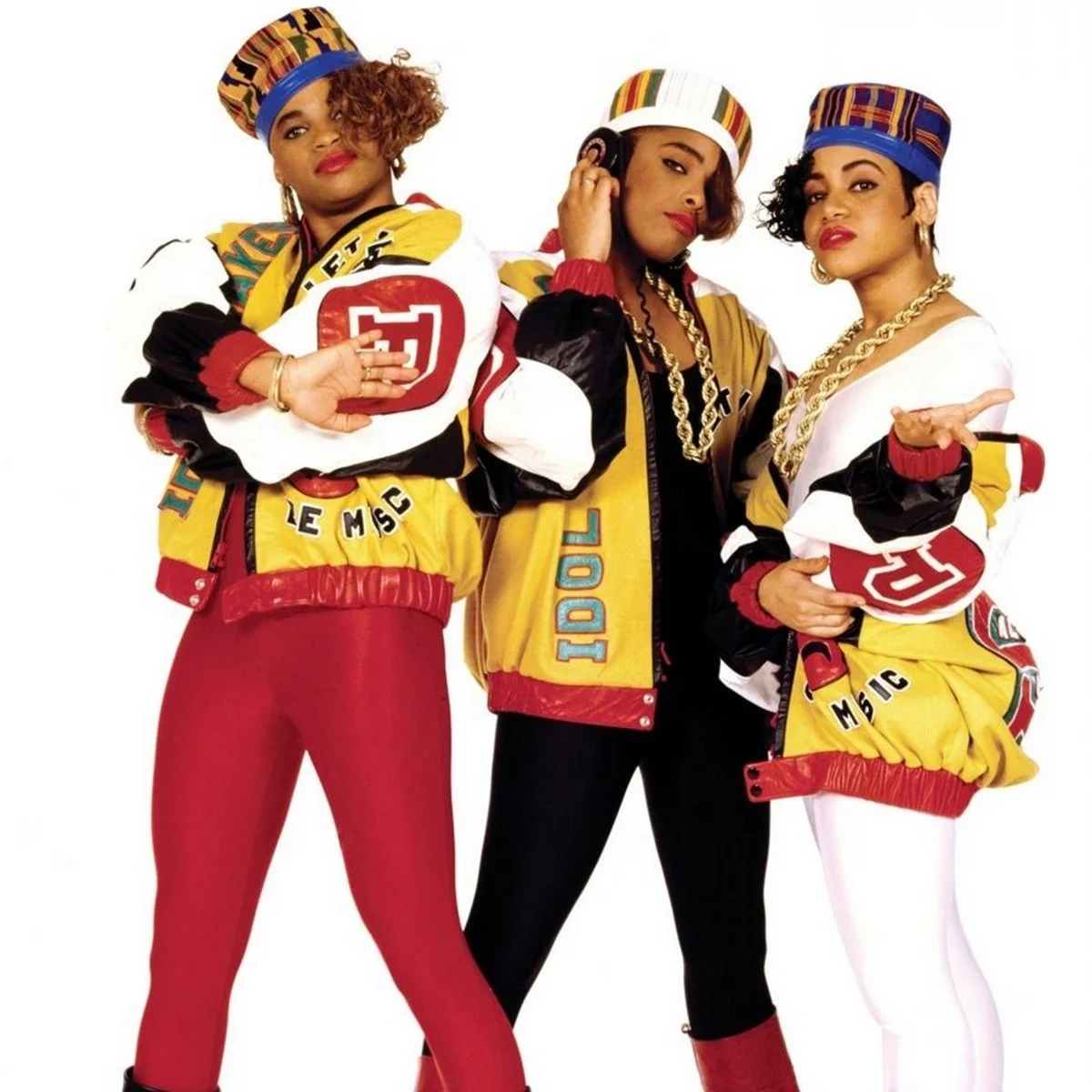
Salt-N-Pepa
As a therapist working with creatives and someone who spent years researching how music carries cultural memory, I'm watching this nostalgia wave with professional curiosity and personal concern. Is this collective reaching backward a symptom of cultural fragmentation, a society so broken it can only remember what it used to be? Or is it something more hopeful: an attempt at cultural healing through emotional continuity or a way of rebuilding lineage when institutions have failed to preserve it?
I think it's both. And understanding which impulse we're serving, whether it’s fragmentation or healing, might determine what kind of culture we build next. The numbers tell a story about collective desire. Catalog music, which are basically songs released more than 18 months ago, now accounts for over 70% of music consumption in the United States. For folks who aren’t into data, this isn't a small shift. This number represents a fundamental change in how we engage with music as culture in the US.
Streaming platforms designed to prioritize novelty and discovery are instead revealing audiences who want the familiar, the historically rooted, the emotionally grounded. The algorithm says "try this new artist," but the listener says "play me something I already love, something that connects me to who I used to be or who I want to remember." Those who know me know that James Brown's Funky Christmas is my go-to holiday album (Sorry, Mariah) and that I’ll put on Erykah’s Mama’s Gun before anything in the Top 100.
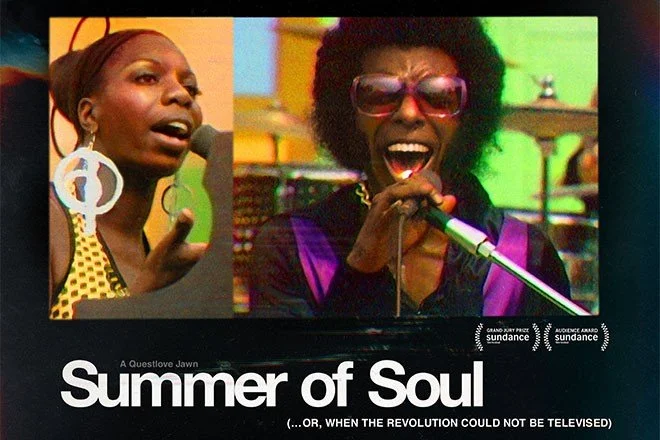
Music documentaries aren't niche anymore. While spending quality time with my mother last month, she said, "Let's watch *Summer of Soul*!" This is Questlove's excavation of the 1969 Harlem Cultural Festival, which won an Oscar and drew mainstream audiences hungry for connection to a cultural moment they didn't experience firsthand." The film succeeded not just as historical recovery but as emotional bridge, showing contemporary audiences what intergenerational musical collaboration looked like when it was rooted in shared struggle and collective joy.
Legacy artists are being revalidated not as nostalgia acts but as essential cultural touchstones. Salt-N-Pepa was just induction into the NAACP Image Awards Hall of Fame last week, which was in one part about honoring past achievement, but mostly about insisting that their contribution remains relevant, that the lineage they helped build matters now, that what they represented (Black women claiming space, voice, sexuality, power in hip-hop) isn't historical artifact but living legacy!
Britney Spears selling her catalog feels different. Some might see it as just a financial transaction, but I see it as the commodification of a generation's emotional soundtrack. The songs that accompanied first heartbreaks, high school dances, early sexual awakening are now owned by a corporation that will license it back to us, monetizing our memories. The transaction reveals something about how capitalism treats emotional continuity as extractable resource, but the intensity of public response reveals how much those songs still mean, how thoroughly they're woven into our sense of who we were and who we've become. Personal longing is driving this nostalgia, as well as institutional amnesia. We're reaching for legacy music because the institutions responsible for preserving and transmitting cultural memory have abandoned that responsibility.
My research on 19th-century Black orchestras taught me how thoroughly institutions can erase achievement that contradicts preferred narratives. Francis Johnson, Walter Craig, the Negro Philharmonic Society were internationally acclaimed musicians whose orchestras shaped American music. Their erasure from music history was ideological, serving narratives about racial capability and cultural ownership that required forgetting Black classical excellence. We're living through another era of institutional forgetting, though it operates differently now. Contemporary erasure happens through algorithmic prioritization that values novelty over legacy, through streaming economics that incentivize constant content production over deep catalog preservation, through education systems that teach music history as disconnected facts rather than living lineage.
When schools cut music programs, they say oh it’s just eliminating band practice. But it isn’t. They're actually severing connections to musical traditions that carry cultural memory. When streaming platforms bury catalog music beneath endless "new release" playlists, they're training listeners to value novelty over continuity. When music journalism focuses almost exclusively on breaking artists, they're implying that what happened last year (let alone last decade!!) doesn't matter. The result is generations who know songs but don't know lineage. They can stream Britney but don't know the tradition of women pop artists she emerged from and helped shape. They love Salt-N-Pepa but don't understand the hip-hop feminism they helped forge or the artists they influenced. They hear samples without recognizing the original sources, experiencing music as disconnected moments rather than evolving conversation across time.
This institutional amnesia creates hunger. When culture won't teach lineage, people seek it themselves. If they can find it. If they even know how to look for it. They watch music documentaries, buy vinyl reissues, create TikToks explaining musical history to each other. They're consuming nostalgia AND they're doing the work institutions should be doing, e.g. preserving memory, building connections, and maintaining continuity. But another force drives our collective reach backward: political and cultural instability that makes the past feel safer than the present or future. We're living through a moment when the current US administration is actively working to reshape culture through propaganda, to control narratives about who belongs in American life, to weaponize nostalgia for a past that never existed while erasing the actual complicated history we lived through.
In this context, nostalgia becomes complicated. Are we reaching for legacy music as resistance, insisting on remembering what actually happened, who actually contributed, what we actually valued against narratives trying to rewrite our past? Or are we retreating into comfort, choosing familiar emotional territory because the present feels too unstable and the future too uncertain? The answer depends on which nostalgia we're practicing. There's regressive nostalgia that imagines a past better than it was, that edits out struggle and complexity, that uses selective memory to avoid present challenges. This nostalgia says "things used to be simpler, better, more authentic" while conveniently forgetting who was excluded from that imagined golden age, whose voices were silenced, what injustices were normalized. Isn’t that “Great.”
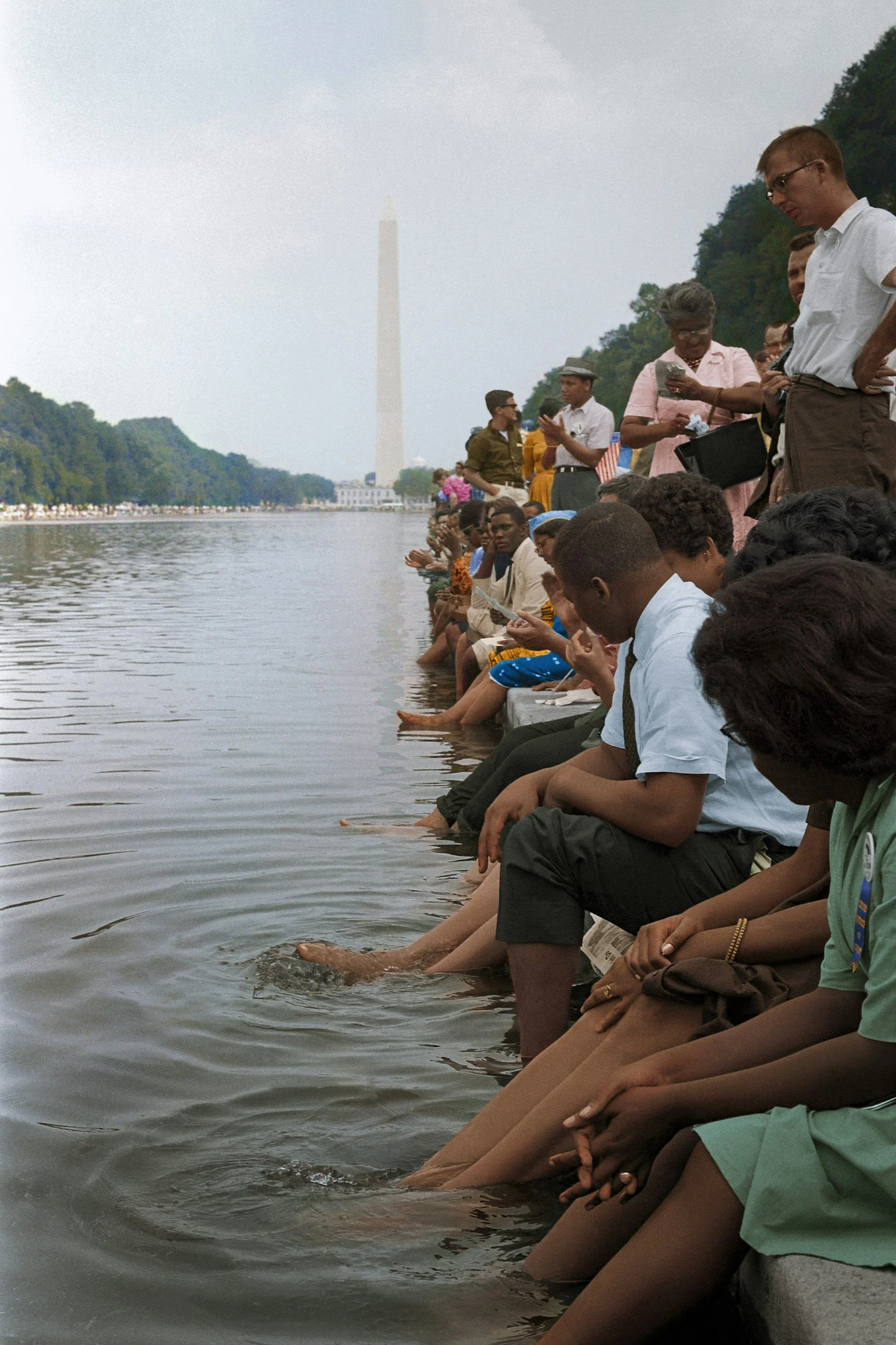
Folks cooling down at the Million Man March, 1963
Then there's what I think of as restorative nostalgia, which isn’t necessarily retreating to an idealized past, but recovering actual history that's been erased, reconnecting with lineages that institutions failed to preserve, and finding emotional continuity with people who faced similar struggles and found ways forward. When we watched *Summer of Soul*, my mother and I discovered a massive cultural festival we never knew happened. She, more than I, indulged nostalgia and we collectively recovered stolen history, reclaimed evidence of Black cultural achievement that was deliberately buried, and reconnected with ancestors who created joy and community even in the midst of struggle. I even shed a few fears because it felt like a reclamation.
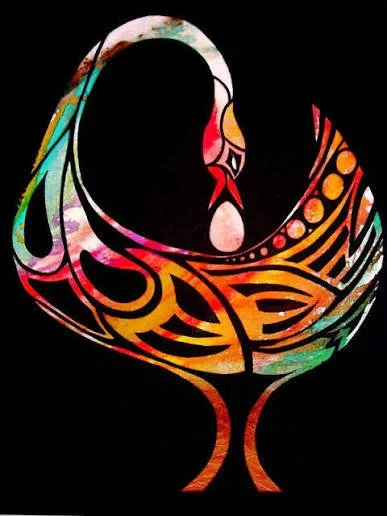
When Salt-N-Pepa got inducted into halls of fame, with MC Lyte there in the audience, I felt that that what they built, space for Black women's voices in hip-hop, models of creative and economic independence, representations of sexuality that challenged both patriarchy and respectability politics, remains relevant to present struggles and future possibilities. The question is: which nostalgia are we collectively practicing? Are we reaching backward to avoid present challenges, or are we reaching backward to find resources for facing them? This is a Sankofa moment.
Because then I bopped a little too hard to something that turned out to be AI-generated and it gave me pause. AI music is on one hand a technological development and it's also a philosophical challenge to how we understand creativity, authenticity, and emotional connection. When AI can generate technically proficient music in any style, it forces us to ask what human-created music offers that algorithms can't replicate! The answer seems to be: lineage, lived experience, emotional specificity rooted in actual human struggle and joy, cultural memory transmitted through artistic practice.
AI can analyze Britney's entire catalog and generate new songs that sound like her. But it can't create music that carries the specific emotional weight of watching a young woman lose autonomy, fight for freedom, and reclaim her voice. It can't embed in sound the cultural moment when her conservatorship battle made millions of people reconsider how we treat women who don't perform acceptable femininity. AI can study Salt-N-Pepa's musical patterns and reproduce them. But it can't create music that carries the history of Black women carving space in male-dominated hip-hop, that references decades of feminist struggle through musical choices, that connects contemporary listeners to lineages of resistance and joy. This is what legacy music offers that AI can’t.
Legacy music is created by humans with specific histories, embedded in cultural moments, carrying emotional weight accumulated through lived experience. When we stream catalog music, we're connecting with human stories, cultural memories, and emotional lineages. AI music might ultimately drive us deeper into appreciation of human creativity because, like I said, AI cannot replace human output. But it can clarify what makes human-generated music irreplaceable. The more technically proficient but emotionally hollow music we encounter, the more we might value music that carries the weight of actual human experience.

So which is it? Is our nostalgia wave evidence of cultural fragmentation, a society so broken it can only remember, can't create, can't imagine futures worth building? Or is it evidence of attempted cultural healing. Is it people working to restore emotional continuity, reconnect broken lineages, and remember what institutions forgot? To me, I think it's both. And distinguishing between them requires looking at what we do with the nostalgia we're experiencing.
Cultural fragmentation nostalgia treats the past as superior to the present, uses memory to avoid engagement with current challenges, creates hierarchies where "real music" existed in some golden age and everything since is degradation. I will admit to being stuck here sometimes in a nostalgia that says the problem is that we stopped making good music, stopped having real artists, stopped creating authentic culture. This version is regressive and ultimately destructive. It prevents us from recognizing current achievement, from supporting emerging artists, from building new cultural forms adequate to our present challenges. It treats culture as something that happened rather than something we're still making.
Cultural healing nostalgia works differently. It recovers erased history to inform present action. It reconnects broken lineages to provide resources for current struggles. It honors past achievement. It doesn’t declare the present inadequate. It really just helps us build on foundations we didn't know existed. When audiences watch *Summer of Soul* and discover the 1969 Harlem Cultural Festival, the healing version of nostalgia says: "Look what they built under impossible circumstances. Look how they created joy and community and resistance through music. What can we learn from them? How can we build on what they started? Where can I get that outfit? Did you notice that no one was drinking of smoking?“
When we celebrate legacy artists like Salt-N-Pepa, the healing version says: "Look at the space they carved, the voices they amplified, the models they created. Their legacy is ongoing, unfolding through artists they influenced, through cultural conversations they started, through possibilities they demonstrated." The difference is movement! Regressive nostalgia looks backward and stops there. Restorative nostalgia looks backward to gather resources for moving forward. Like I said, Sankofa moment.
One of my clients who creates films said in session, “People are storytellers,” when we discussed memory and credible witnesses. I think that statement applies here too. We're meaning-making creatures who understand our lives through narrative. Music provides one of the most powerful ways we construct and transmit those narratives. Legacy music matters because it helps us tell complete stories about who we are and where we come from. When we lose connection to musical lineage, we lose ability to tell coherent stories about cultural development, artistic influence, collective memory. This matters professionally for musicians trying to understand their craft and their place in ongoing traditions. How can contemporary R&B artists understand what they're building on if they don't know the lineage from gospel through soul through funk through new jack swing through neo-soul that created the vocabulary they're using?
It matters personally for people trying to make sense of their lives. The songs that soundtracked your adolescence are, as we say in clinical hypnotherapy, memory anchors, which are basically emotional time machines that connect current self to past self, that maintain continuity across the changes life brings. It matters culturally for societies trying to understand themselves. Music carries history that official records miss, such as how people actually felt, what they actually valued, how they navigated circumstances that seemed impossible. When institutions fail to preserve and transmit this musical lineage, people do the work themselves. They create playlists connecting past to present. They make documentaries recovering buried history. They write social media threads explaining musical connections to each other. People do the essential cultural work.
The most hopeful thing I see in current nostalgia isn't just celebration of the past but intergenerational collaboration that treats legacy as living conversation rather than finished chapter. *Summer of Soul* succeeds partly because Questlove, as filmmaker, creates bridge between the 1969 festival and contemporary audiences. He's documenting history, translating it, making connections explicit, and showing us contemporary viewers why this matters now.
When young artists sample legacy music, they're sometimes stealing hooks when they don’t credit the OGs, but at best, they're entering conversation with musical ancestors, building on foundations, and extending traditions while transforming them. When Salt-N-Pepa got honored, I teared up a bit because that televised moment created countless opportunities for younger artists to learn the lineage they're part of, to understand that the space they occupy was carved by specific women who fought specific battles to create specific possibilities. This is what I mean by intergenerational work! Older artists sharing knowledge, younger artists learning lineage, all of us working to preserve and extend cultural memory. This is what transforms nostalgia from retreat into resource.
It's also deeply therapeutic. In my clinical work, I see how healing requires integrating past experience with present reality, how trauma fragments memory and healing restores continuity, and how healthy development requires connection to lineage and legacy. The same is true culturally. A culture that can't remember its past, that treats history as disconnected moments rather than ongoing story, that severs younger generations from lineages that could guide them… that's a traumatized culture exhibiting fragmentation symptoms. A culture working to restore memory, rebuild lineages, honor legacy while building new forms, well, that's a culture attempting healing, even if that healing is incomplete, even if the work is difficult. Even if success isn't guaranteed.
For the creative professionals I work with, this cultural moment creates both challenges and opportunities. The challenge is surviving in attention economy that privileges novelty over depth, viral moments over lasting impact, and algorithmic success over artistic development. Musicians face pressure to constantly produce content, chase trends, optimize for algorithms that don't value the things that make music culturally significant over time. It’s exhausting and non-exhaustive.

The opportunity is that audiences increasingly hungry for emotional continuity, historical rootedness, human connection create space for artists willing to work outside those metrics. There's demand for music that carries weight, that connects to lineages, and that offers emotional specificity rooted in lived experience rather than algorithmic optimization. The musicians who will thrive aren't necessarily those producing the most content or chasing the most trends. They're often building deep connection with audiences who value music as more than background sound. Folks who want artists with perspective and history and something to say (see Bad Bunny’s Super Bowl halftime show). And those who understand that the best music comes from humans with specific experiences embedded in cultural moments.
Legacy music's current dominance suggests audiences know the difference between music optimized for streaming metrics and music created by humans with stories to tell. They're choosing stories, choosing continuity, choosing connection. For emerging artists, this means the work isn't just creating music, but really understanding lineage, knowing what you're building on, being able to articulate how your work connects to traditions while transforming them. It means treating your artistic ancestors as collaborators rather than competition, learning from legacy artists rather than dismissing them as irrelevant. For established artists, it means recognizing that legacy isn't finished achievement, but ongoing responsibility. Your contribution doesn't end when you stop creating. Your contribution continues as younger artists build on what you started, as your work gets re-contextualized in new moments, and as the possibilities you demonstrated get extended in directions you couldn't imagine.
So as we go Back Down Memory Lane, is nostalgia dominating our future-focused culture because we're fragmenting or because we're trying to heal? I’ll argue that it's evidence of attempted healing in response to actual fragmentation. We're reaching for legacy music because institutions forgot to preserve lineage, because political instability makes the present feel dangerous and because AI threatens to replace human creativity with algorithmic optimization. Or maybe because we're desperately trying to maintain emotional continuity in a culture designed to fragment our attention and monetize our memories.
But the reaching itself, the deep pang for connection, the work to recover erased history, the desire to honor legacy while building new forms… Wow, that's a healing impulse. That's people recognizing something's broken and trying to repair it, even if the available tools are imperfect, the work is difficult, or success isn't guaranteed. Sometimes I wonder whether we can move from individual nostalgia consumption to collective lineage building. Can we transform personal memory anchoring into cultural continuity restoration? Can we use our yearning for legacy music to demand institutions preserve and transmit musical lineage? Can we treat legacy artists as living resources rather than finished chapters? Can we practice restorative nostalgia that honors the past while building futures adequate to our challenges? Too many questions. But I believe we can because I've seen it work. I've watched communities recover erased history and use it to inform present action. I've seen artists learn lineages and build on them in ways that honor tradition while transforming it. I've witnessed how emotional continuity makes cultural healing possible.
The songs that remember us, that legacy music we reach for again and again, is comfort food for fragmenting culture. Those songs are resources for healing, evidence of what humans created under impossible circumstances. That music is proof that people before us faced similar challenges and found ways to make beauty, meaning, and community. When we stream Britney, we're remembering our adolescence and connecting current self to past self, maintaining continuity across change. When we celebrate Salt-N-Pepa, we're honoring achievement and maintaining lineage, keeping visible the path they carved for others to walk. When we watch *Summer of Soul*, we're discovering lost history and recovering evidence of what's possible when people create culture together. This is healing work disguised as nostalgia. This is lineage building disguised as consumption. This is cultural repair disguised as personal comfort.
And yes, it's also all those surface things: consumption, comfort, retreat, whatever. Which version do we choose to practice? Which impulse do we feed? Which possibilities do we build on? We're living through a moment when the past feels safer than the future, when reaching backward seems easier than building forward. But the legacy music we're reaching for was created by people who faced similar moments, who chose to create despite uncertainty, and who built culture that outlasted the circumstances that produced it. They're offering us comfort, models, examples… evidence of human creativity's capacity to make meaning under impossible conditions.
My challenge to you is what will you do with the lineage they preserved? Will you just consume it nostalgically or will you use it to build something new, something adequate to our challenges, something future generations might reach for when they need evidence that we created beauty despite everything trying to prevent it? Because that's the work ahead. Not just remembering the music, but living the lessons it carries. Honoring legacy and extend it. Consuming nostalgia and building continuity. What will you create that's worth remembering?